
Caring for your wellbeing during election season
A guide for advocates, voters, and communities navigating public debate.
Election campaigns can be energising, but they can also feel overwhelming. Debates about policy, social inequality, and health can stir up strong feelings, particularly if you have personal experience with mental distress or health system failures.
Here is how you can stay grounded, protect your wellbeing, and care for yourself and your whānau during this election.
1. Check in with yourself
Thinking or talking about mental health-related laws, policies and services can bring up big emotions.
Before engaging in debates, attending rallies, or posting online, ask yourself: How am I feeling right now? Am I feeling strong, safe and supported? Do I feel ready to talk about distressing experiences or situations my loved ones, colleagues or I may have experienced?
Even if your experiences were positive, they may remind you of other situations that were not as positive.
Check in with yourself throughout each step of the process – you can always take some time out if you need to.
2. Know your limits with news and social media
‘Doomscrolling’ election headlines or social media commentary can heighten anxiety. To set boundaries around engaging with election-related news, you could try:
- Turning off news notifications and setting dedicated times during the day to check updates.
- Muting keywords or accounts that trigger distress.
For more tips on how to protect your wellbeing online, take a look at our Wellbeing Online Guide.
3. Think about who could support you
Consider who you would like to talk to if you’re finding things tough – it could be a friend, whānau member, mental health professional, partner or colleague, or a mix of a few of these.
They should be someone you feel you can trust and talk with openly, about both positive and negative experiences.
Another way to feel supported during the election is by setting up a ‘solidarity group chat’ with trusted friends, colleagues, or whānau. This can be a safe space to share feelings or take a break with humour and lighter topics.
4. Try simple actions to boost your wellbeing
We can always benefit from a wellbeing boost. The Five Ways to Wellbeing are five simple, proven actions you can do regularly to support your wellbeing. You could:
- connect with whānau by sharing a meal together
- take notice of the world around you by sitting outside and listening to the birds
- keep learning by doing a quiz or a crossword puzzle
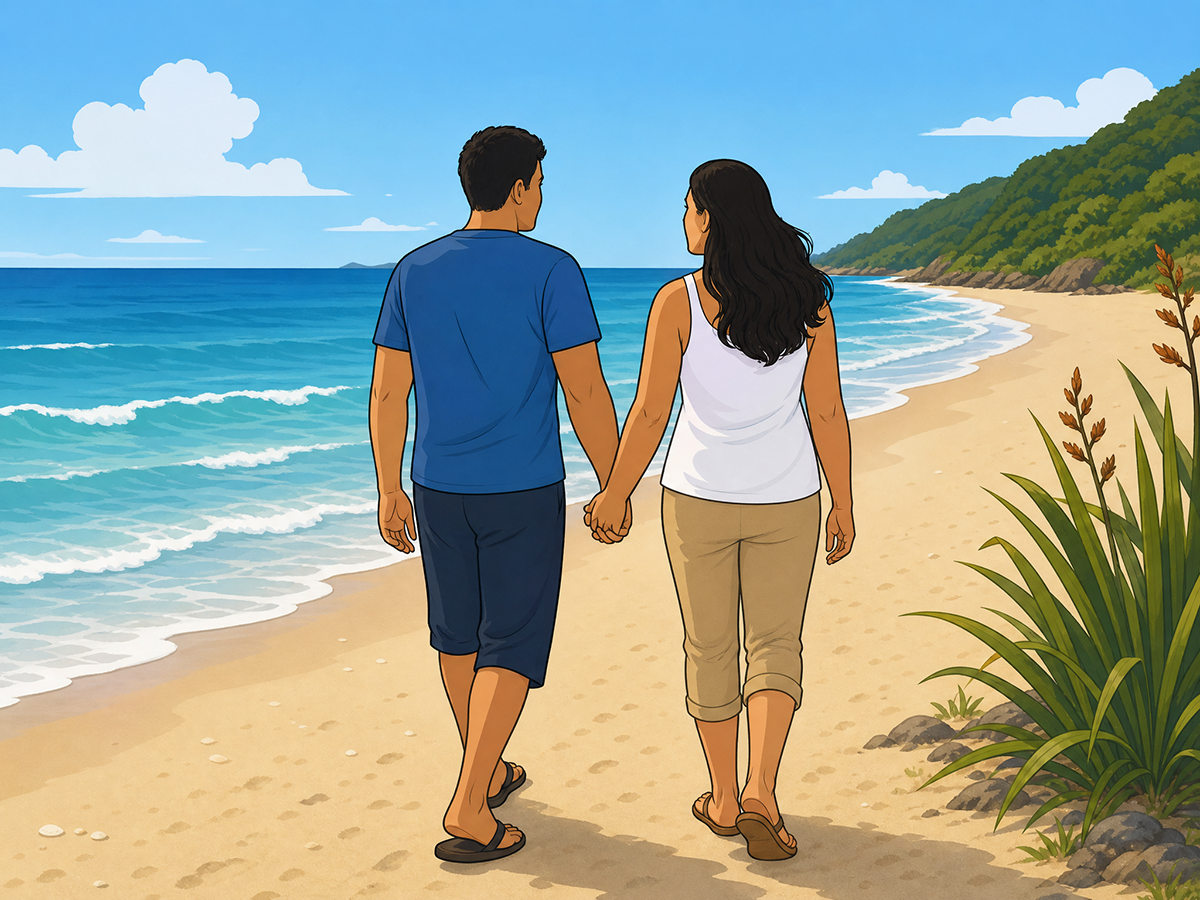
- be active by going for a walk with a friend
- give to others by sharing kindness – even a smile or compliment can make a big difference.
To help calm your mind before engaging in election advocacy, you could also try one of the activities below.
You could try:
Practising mindfulness or reciting a karakia or prayer. Mindfulness can help you let go of troubling thoughts and ground you in the here and now. Watch this guide to mindfulness or try to start and end each day with a karakia that grounds you.
Box breathing. This practice can help you achieve a feeling of calm whenever you need it. To start, breathe in for up to five seconds, then hold your breath for up to five seconds, then exhale for up to five seconds, and then end by holding your breath for up to five seconds again. You can repeat these steps as many times as you like. Watch this video for a demonstration of box breathing.
Writing your worries down. It’s normal to feel worried or anxious about ideas or experiences beyond your immediate control. Writing about or drawing your worries can help you work through how you’re feeling. Noting down what you’re grateful for can also give you some balance and perspective.
Using progressive muscle relaxation exercises. If you feel worried, anxious or unsafe, your body tenses up. Progressive muscle relaxation is a technique that can help you de-stress your body by tensing and relaxing your muscles one at a time. You can do this by:
- inhaling deeply and slowly, and then
- tensing a muscle group (such as your fists or forehead), and then
- holding that tense for five seconds, and then
- releasing it.
Afterwards, you’ll feel the muscle group relax. It can really make a difference! You can find out more about progressive muscle relaxation here.
For more ideas on how to support your wellbeing, visit our Wellbeing Hub.
5. Reflecting on your experiences
Debate around New Zealand’s mental health-related laws, policies and services may make you think about your own experiences. Whether positive or negative, recounting your experiences might bring up emotions that need working through before you feel ready to begin advocating for change.
There are ways to reflect on your personal experiences that can feel easier than simply thinking through them alone. For example, you could:
- Talk about your experiences with trusted whānau, friends, peer support workers or mental health professionals.
- Express your experiences in a creative way. You might find it easier to express your experiences through poetry, creative writing, painting, drawing, music, videography or dancing, for example, rather than just thinking about them.
- Journal your feelings. Writing your emotions down on a piece of paper can help to distance all kinds of emotions you may feel around your experiences.
- Take time out. If you’re feeling overwhelmed, take some time for yourself with one of the wellbeing boosters in step four.
6. Looking after your wellbeing on election day, and after
You can’t control every political outcome or public comment. Focus your energy on your own vote, small acts of kindness in your community, and looking after yourself and your loved ones.
During times like these, practising radical acceptance can also help. Radical acceptance is fully acknowledging and embracing the present moment, including difficulties and discomforts, without trying to change or control it. You can learn more about radical acceptance here and practise radical acceptance by acknowledging:
- You have done what you felt you needed or wanted to do to contribute to change.
- You have done your best – what happens in the election, and all that means, is now out of your hands.
- To help move your mood, you can reconnect with your solidarity chat group or support person/people, and practise one of our wellbeing boosters in step four.
Share this page
There is no health without mental health
Help ensure everyone in Aotearoa has the tools to enjoy positive mental health and wellbeing.
Was this page useful?