
Nōku te Ao Puna Pūtea | Social Action Grants
Criteria and eligibility
Is your project eligible for a grant? Find the criteria and key information here.
Applications opened at 9am on Monday 27 July and closed by Sunday 6 September 2026.
Nōku te Ao is a public awareness programme that aims to increase social inclusion and end discrimination towards people with living or lived experience of mental distress or illness. This is important, because one in five New Zealanders experience mental distress or addictions each year. Some population groups are more at risk than others – almost one in three Māori and one in four Pasifika experience mental distress.
Mental distress touches many of us – in our own lives, and in the lives of our whānau, colleagues, loved ones and friends. People with lived experience make invaluable contributions to our workplaces, homes and communities every day. Yet mental distress prejudice and discrimination remain widespread, and we want to change that. To do this effectively, we must look at who is most likely to experience mental distress, and therefore, who is most likely to experience prejudice and discrimination. While our programme is for all New Zealanders, it specifically seeks to increase social inclusion for Māori and Pasifika as priority audiences.

What are Nōku te Ao Puna Pūtea | Social Action Grants?
Nōku te Ao Puna Pūtea | Social Action Grants are grants of between $10,000 and up to $40,000 funded by the Nōku te Ao programme and administered by the Mental Health Foundation. Pūtea or money is awarded to projects that aim to challenge negative stereotypes, unfair judgements, and discrimination towards those of us who live with mental distress or illness.
What kinds of grants are available?
There are two types of grants available, with a total pool of $160,000 to support grassroots, community-led solutions that reduce mental distress discrimination and promote inclusion.
- Grants of up to $40,000. Preference for these grants will be given to non-corporate groups, community and lived experience groups, committees, marae, and whānau, hāpu and iwi rōpū/groups. Applicants for these grants must be open to co-designing their project with the Mental Health Foundation.
- Grants of between $10,000-$20,000. These grants are recommended for individuals and organisations.
Who are the grants for?
Do you have an idea to challenge mental distress discrimination and create real change? Our Puna Pūtea | Social Action Grants are open to community groups, organisations, hapū, iwi and individuals. Tell us about the change you want to see, and how funding could help bring your vision for ending mental distress discrimination to life.
Where does mental distress discrimination occur?
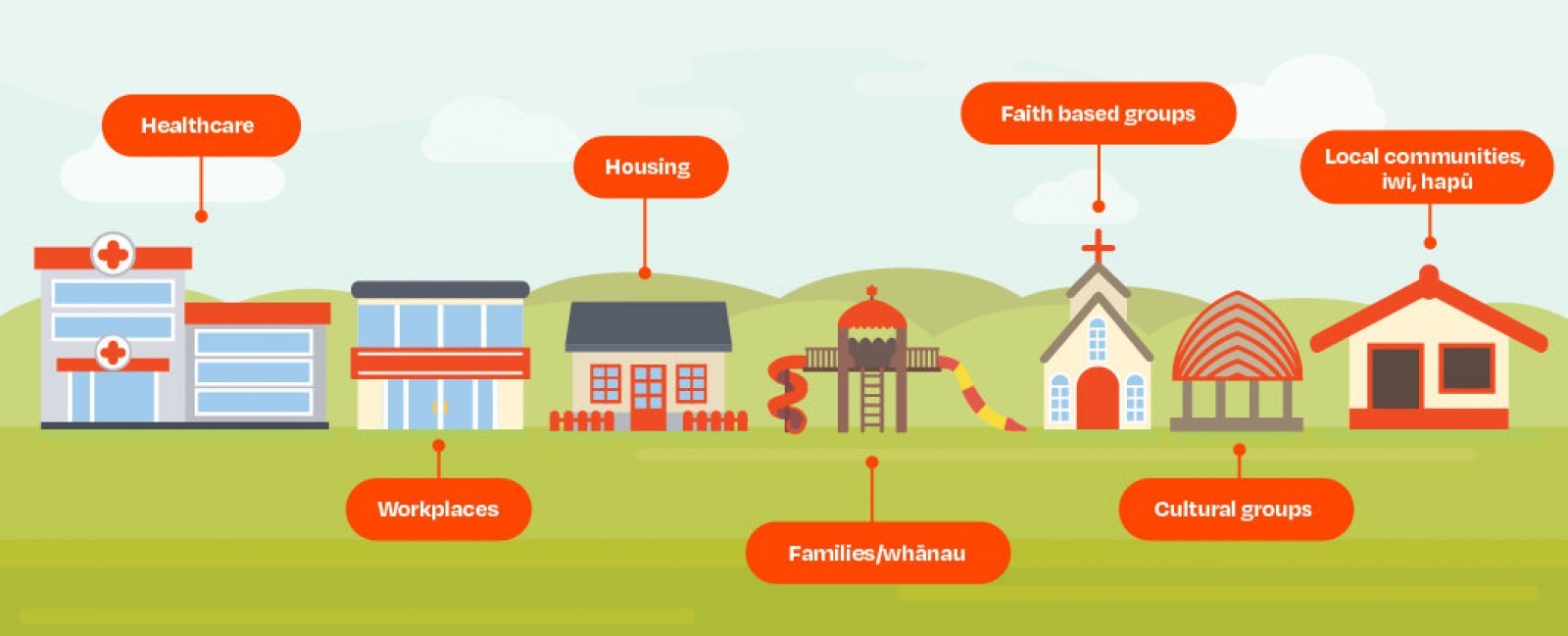
Mental distress discrimination occurs in all sorts of places – in our workplaces, in societal structures like our health system, in our communities, iwi and hapū, and even in our own homes. According to a 2022 report by the Office of the Ombudsman, Māori are disproportionately secluded in mental health facilities.
See below for some settings that your project could focus on:
- Healthcare
- Workplaces
- Housing
- Families / Whānau
- Faith-based groups
- Cultural groups
- Local communities, iwi, hapū
What do we fund?
The kind of projects we’re looking to fund are diverse. We want to hear your ideas about how to end mental distress discrimination and make your moemoeā/vision come alive.
We prioritise applications that:
- Focus on people most impacted by discrimination, for example, Māori and Pasifika, and people with lived/living experience of mental distress or illness,
- Are lived experience-led,
- Are committed to achieving equity,
- Embed the Nōku te Ao Kaupapa Māori principles,
- Hold space for and utilise Pasifika approaches,
- Can bring about sustained improvement in attitudes, behaviours or structures.
Grant criteria
To be successful in your grant application, you’ll need to demonstrate the following:
1. Purpose alignment
Clearly describe how your project will address unfair judgements and discrimination faced by whānau experiencing mental distress.
Your project should contribute to four levels of change:
- Improved knowledge and awareness of mental distress,
- Improved attitudes and perspectives towards mental distress,
- Inclusive behaviours and practice in approaching mental distress,
- Structural changes to the policies and processes in organisations and systems that impact inclusion, e.g., landlords, employers, schools, churches.
2. Cultural sensitivity and representation
- Align your project with Nōku te Ao Kaupapa Māori principles and demonstrate a respect for and incorporation of cultural values, particularly within Māori and Pasifika contexts, as appropriate.
- Consider the diverse needs and perspectives within the community your project serves.
- Ensure the protection and promotion of autonomy, mana, and dignity for all individuals involved in the project.
3. Community impact
- Demonstrate a clear and measurable plan for reducing stigma and fostering understanding within the targeted community.
- Empower those with lived experiences of mental distress and amplify their voices.
4. Innovation and creativity
- Employ innovative or creative methods to challenge stereotypes or misconceptions about mental distress.
- Projects that involve storytelling, arts, workshops, or advocacy are strongly encouraged.
5. Collaboration and inclusion
- Collaborate with individuals who have lived/living experience of mental distress to achieve project deliverables.
- Partnerships with community organisations, iwi, or workplaces to promote inclusivity are highly regarded.
- Explore ways to connect individuals who haven’t experienced mental distress with the stories and perspectives of those who have. How will your project enhance understanding of diverse experiences, cultivate inclusive spaces, challenge stereotypes, and advance collective efforts to shift prejudice and discriminatory attitudes and behaviours?
6. Sustainability and reach
- Outline how the project will create lasting change or build ongoing support for whānau affected by mental distress. How will your project create transformative long-lasting change and/or continue to have a positive effect over time?
- Consideration should be given to the scalability or adaptability of the initiative for broader application. Consider how your project could expand its reach, impact or capacity?
7. Measurable outcomes
- Clearly identify the key outcomes you expect to achieve, along with a plan to measure the project's success.
- Include changes in attitudes, participant feedback, or policy shifts.
8. Budget and feasibility
- Provide a detailed and realistic budget aligned with project objectives.
- Show how deliverables are achievable within the grant timeframe and funding limits.
9. Project resilience
- Consider any barriers that may impact your project (technical issues, unplanned absences). Outline proactive strategies to mitigate these challenges and ensure continuity.
What we cannot fund
- Projects that focus on suicide. While suicide can be mentioned as part of many people’s mental distress journeys, your grant application cannot focus on it and must focus on ending mental distress discrimination.
- Applications that simply raise awareness of mental distress – your project must specifically aim to help end discrimination against people with mental distress or illness.
- Mental health treatments, mental health first aid workshops or clinical services.
- Political organisations, education institutions and providers, for-profit entities, public sector or local government bodies, or entities already funded by Nōku te Ao.
- Projects that have already happened.
- Projects not carried out in Aotearoa New Zealand.
- Late or incomplete applications.
- Study or overhead costs.
- Capital items like computers, tablets, or cars.
- Grantees who won a grant last year.
Key dates for the 2026/2027 Grant Round
| Applications open | 9am, Monday 27 July 2026 |
| Applications close | 11:59pm, Sunday 6 September 2026 |
| Assessment period | Monday 7 September – Friday 2 October 2026 |
| Applicants notified | 5 – 7 October 2026 |
| Contracts signed | 12 – 23 October 2026 |
| Grantee Orientation Hui | 30 October 2026 |
Need more information?
Reach out to SocialActionGrants@mentalhealth.org.nz to ask any questions or chat with us for advice.
Share this page
There is no health without mental health
Help ensure everyone in Aotearoa has the tools to enjoy positive mental health and wellbeing.

Was this page useful?