Niki Harré Story
My faith: the living world within which we, as people, do our very best
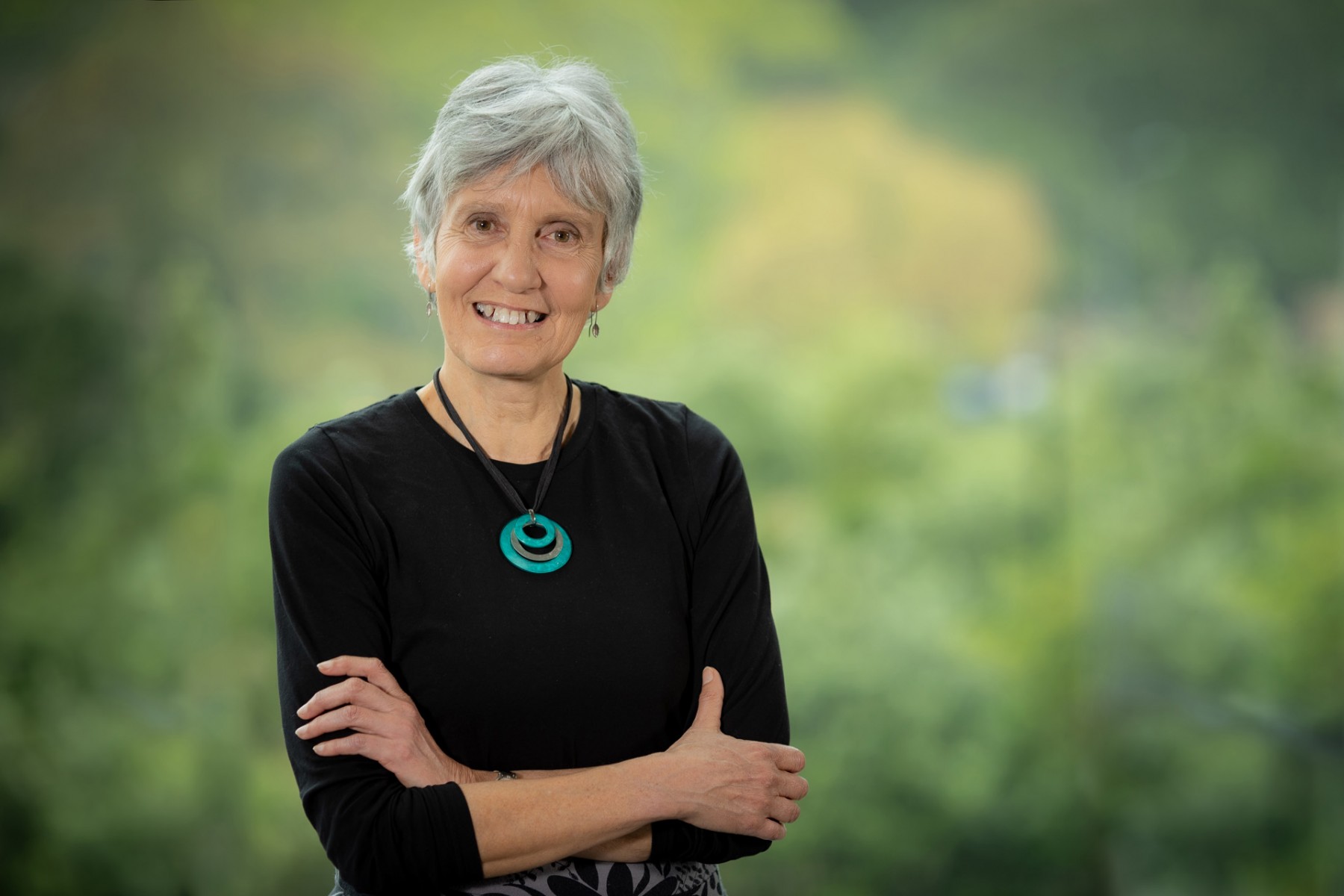
In 2021, as part of a social experiment, I spent the year as a secular priest. This was not a formal role – I made it up. In real life I have an academic position in community psychology, and it was how I spent my most recent sabbatical. For decades, I have worked with groups who are attempting to regenerate ecosystems and enhance our relationships with each other. And, as a witness to much angst, I had often wondered if we needed people whose role it is to help others find their contribution, treasure the other, and know they are in community. I saw this role as priest-like – similar in some ways to a therapist, counsellor, or coach, but with more emphasis on the common good and collective exploration.
As I have no religious beliefs, it was also without God. As well as offering ‘services’ and ‘personal conversations’, I attended a Christian church for a year and did a lot of reading. I wanted to figure out how religion (or at least the one I was most familiar with) turned people towards the big picture while nurturing them as individuals. I came across many wonderful Christian writers, such as Richard Rohr and his book The Universal Christ: How a Forgotten Reality can Change Everything we See, Hope For, and Believe – one of my favourites. I also read several books by Barbara Brown Taylor, Kathleen Norris, Thomas Merton and Eugene Peterson, all authors I recommend.
Although I learnt a lot from Christianity, the central story (of Jesus) is not my own. I had always simply accepted that I had no faith and felt no great loss in that. Then, towards the end of the year, I re-read Andreas Weber’s book Matter and Desire: An Erotic Ecology. Weber is a German biologist and philosopher. He writes of how exchange is the essence of life and joy is a product of enlivenment – being in life as an embodied, emotional, desiring creature, with other such creatures. As I re-read Weber in the context of my priestly year, I thought that that was my faith: a hope, wonder and commitment to life itself in all its diversity, glory and even suffering. A former student of mine then introduced me to John Paul Lederach’s book The Moral Imagination: The Art and Soul of Building Peace and I had a second experience of coming home. Lederach understands and expresses the process of building community in conditions of complexity and conflict in a way that is intensely human, inclusive, and full of beauty.
I didn’t start the secular priest project to find a faith. I saw it as the investigation of a potentially useful social role. But I ended up realising that I had faith in the living world within which we, as people, do our very best. When I look over the estuary near my home and see flocks of birds spinning through the air, I sense I am being held in a way that makes me feel calm, devoid of fear, and ready to care for others. That’s faith, I think. And books helped me discover it.
About Niki
Niki Harré is a professor in the School of Psychology at Waipapa Taumata Rau | The University of Auckland. Her research addresses issues of sustainability, citizenship, values, and political activism. In 2007 she co-edited the book Carbon Neutral by 2020: How New Zealanders Can Tackle Climate Change. In 2018 she published Psychology for a Better World: Strategies to Inspire Sustainability (2nd edition) and The Infinite Game: How to Live Well Together.
You can read more about the secular priest project here: https://www.secularpriest.org/
Niki’s university homepage is here: https://profiles.auckland.ac.nz/n-harre
Book details
Lederach, J. P. (2005). The moral imagination: The art and soul of building peace. Oxford University Press. ISB 9780195174540.
Rohr, R. (2019). The universal Christ: How a forgotten reality can change everything we see, hope for, and believe. Convergent Books. ISBN 978-1524762094.
Weber, A. (2017). Matter and desire: An erotic ecology. Chelsea Green Publishing. ISBN 9781603586979.
This story was part of the Mahi Stories feature where experts in the mental health sector shared the resources and knowledge they have found most helpful in their own work and lives.
Related information

Share this page
There is no health without mental health
Help ensure everyone in Aotearoa has the tools to enjoy positive mental health and wellbeing.