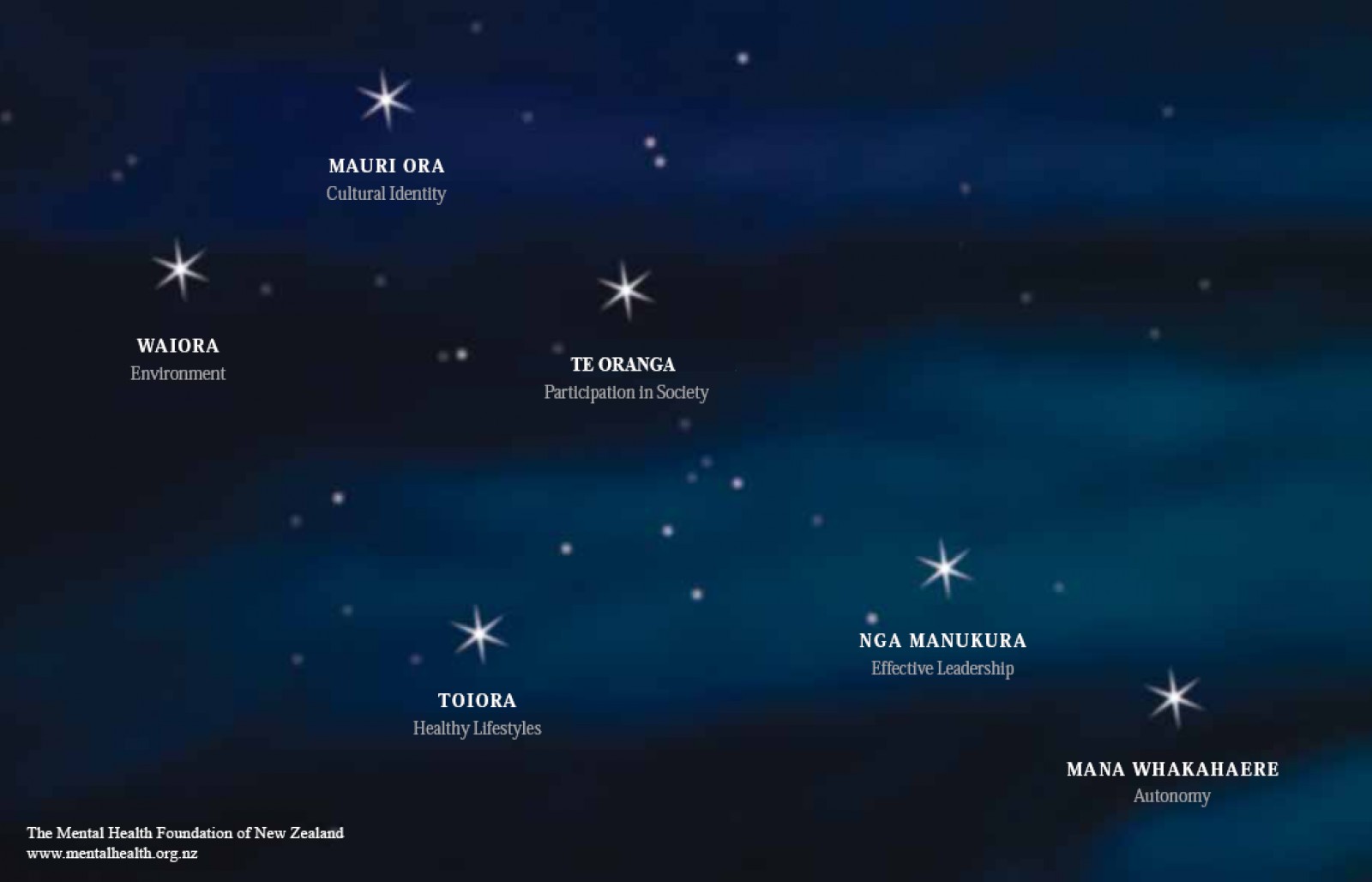
Mauri Ora: Cultural Identity
In the creation of this social movement work, we give space to our people to talk about who they are and where they come from. We also work to observe the tīkanga of the communities we journey with and honour any cultural practices that assist in the running of the community meetings.
Te Oranga: Participation in Society
We have a need to ensure that people are able to participate in our activities in a range of ways, and we think intentionally about barriers to access that we might be able to dismantle to increase participation in society more generally.
Waiora: Physical Environment
I think about this star in two different ways in our work. One is Papātuanuku, ensuring that any resources we create are sustainable and work in ways that are respectful of the whenua. But also, I think about waiora in terms of the environment I want to create that enable our communities’ rights to be upheld. I often tag this star to any work I’m doing on creating infrastructure that enables the work to happen.
Toiora: Healthy Lifestyles
This star is what I think of as having the big link to health promotion. How are we elevating and promoting our messages to enable the healthy lifestyles we all deserve to enjoy? I often tag this star to any of the social marketing work we do as this carries the messages out into the world.
As for the pointer stars in the constellation:
Ngā Manukura: Leadership
In our programme, we want our communities to be the leaders in this work. We don’t have all the answers to assist our people. The answers lie in the community and we need to act in a way that draws this important knowledge out.
Te Mana Whakahaere: Autonomy
Autonomy (Mana Motuhake and Tino Rangatiratanga) are important cornerstones of working with our communities. The Ottawa Charter emphasises the word ’enable’; this is what we wish to do, to enable our communties to lead themselves. We are only here to resource and push this goal along.
In practical terms, how are we being guided by ngā whetu?
When I am project managing tasks for the Social Movement, I will tag them with a star:
- Community kōrero about human rights (Te Oranga, Te Mana Whakahaere)
- Ensure there is a tīkanga process for this meeting (Mauri Ora)
- Recruit local community facilitator for this meeting (Te Mana Whakahaere, Ngā Manukura)
- Create social media tiles about upcoming Zoom series (Toi Ora, Te Oranga)
I can also pull out a chart from my project management software those shows how much I am being guided by each of the stars. This can help me to understand if I need to pay attention to some of the other areas I’m not touching on as much.
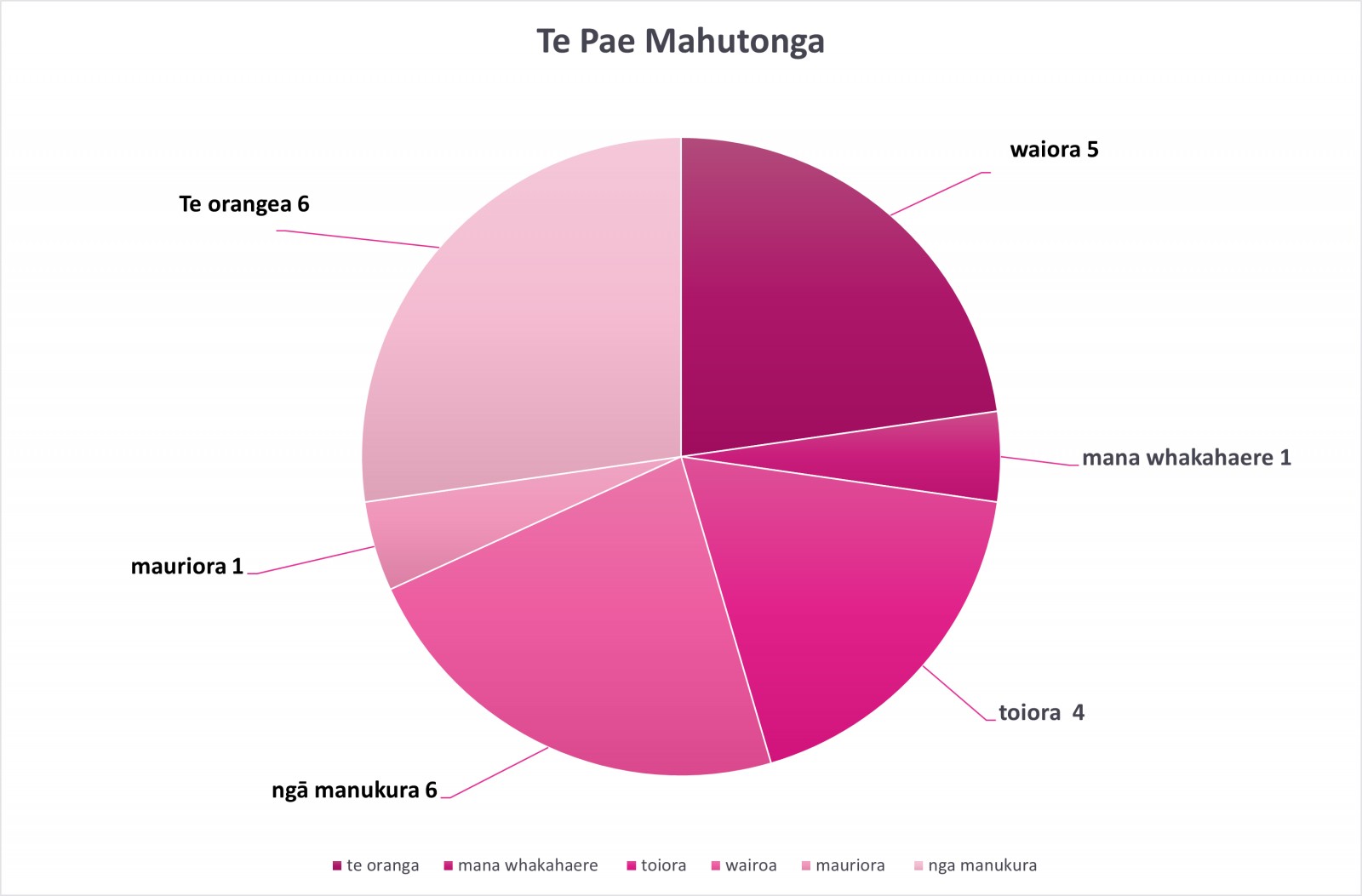
There is a lot of wisdom (mātauranga) held within Te Ao Māori that speaks to our relationship with the stars. Matariki has brought this into focus for many New Zealanders. We are learning about the Maramataka and the work of Rangi Mataamua more commonly now and I hope we can all be a little more guided by the whetu in our work.
About Gina
Ko Georgina Giordani (Gina) tōku ingoa. He uri au nō Ngāti Porou ki Tokomaru, me Kotirana me Ingarani. Nō Tāmaki Makaurau ahau inaianei.
Gina is a senior health promoter and the Mental Health Foundation programme lead for Nōku Te Ao: Like Minds Social Movement, a community movement that uplifts the mana and human rights of people with lived experience of mental distress or illness.
Reference
Durie, Mason (1999), ‘Te Pae Māhutonga: a model for Māori health promotion’, Health Promotion Forum of New Zealand Newsletter 49.
This story was part of the Mahi Stories feature where experts in the mental health sector shared the resources and knowledge they have found most helpful in their own work and lives.