Skip to main content Skip to footer

Why learning matters for your wellbeing

Discover how small moments of learning can boost your wellbeing

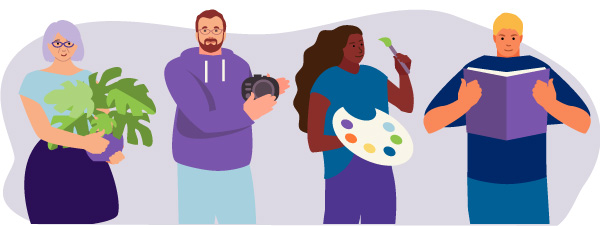
Colourful drawing of four people holding up their favourite hobby item, like a pot plant, paintbrush, or a book.

Learning doesn't have to involve long hours of study. Some of the most valuable learning happens in everyday moments – whether it’s discovering an interesting fact, learning a few words in a new language, or a new hobby.

Trying new things helps to keep you curious, expand your skills and knowledge, and strengthen your connections with others. Even better? Learning can help you manage stress and lift your wellbeing.

Tips for learning every day

Look for opportunities to learn something new each day. We've put together a few simple ideas to help you get started.

Choose a topic that sparks your interest and learn a little each day. You could listen to a podcast during your daily commute, read an article with your morning cuppa, or watch a short documentary. Discovered something interesting? Share a fact you have learnt with a friend or colleague to help them learn something new too.

“I listen to health and wellbeing focused podcasts while I'm out walking - I find this inspires me to keep going!” - Olivia, Coffee Supreme
Pick a language, like te reo Māori, and weave it into your everyday life. Download a language app, or write kupu/words on sticky notes and place them around your home or workspace. Encourage a friend or whānau member to learn with you or ask someone you know to teach you a few phrases.

Spending time at the library is associated with an increased sense of belonging, happiness and wellbeing, and it’s also the perfect spot to learn something new. As well as having an endless supply of books, many public libraries offer author talks, book clubs, workshops and activities for tamariki. Visit Love Your Library to find a library near you.

Is there a hobby you want to try? It could be dance, woodwork, yoga, gardening, or a DIY project. Learn at your own pace by following a YouTube tutorial, or sign up to a community class to learn with like-minded people. Learning alongside others can be a great way to build new connections and give your wellbeing a boost.

“Knitting helps me feel calm and mindful while also learning and challenging myself to be creative.” - Simon

Learning at work

Making time for learning at work benefits everyone. When learning is embedded into the workplace culture, people are more likely to embrace new opportunities to grow and develop. It can boost engagement, job satisfaction and wellbeing, and it can help workplaces retain their people too.

Tips for learning at work

Make time for little moments of learning each day – it could be a morning quiz, watching a webinar, or sharing a fact in your team meeting.

Learning together at work can foster social connection, belonging and shared purpose. Shadow a colleague for a few hours, go for a walking meeting to learn more about their role, or set up a Teams channel or email group where people can share useful resources.

Set aside some time for reflection. Taking time to reflect on your new skills, knowledge and experiences can help you celebrate your progress and identify what you'd like to learn next.

It's never too late to learn

Colourful drawing of two guys smiling, shaking hands, one of them has a speech bubble above him and the other an exclamation mark.

Research shows that learning throughout all stages of life can improve wellbeing by lifting self-confidence, life satisfaction, and quality of life. It can also support cognitive function as you age, help you adapt to change, and keep you connected and engaged with the world around you.

Popular links

Popular resources

Share this page

There is no health without mental health

Help ensure everyone in Aotearoa has the tools to enjoy positive mental health and wellbeing.

Did you find this article useful?

We use cookies to improve your experience, analyse site traffic, and personalise content. By clicking "Accept", you agree to our use of cookies.